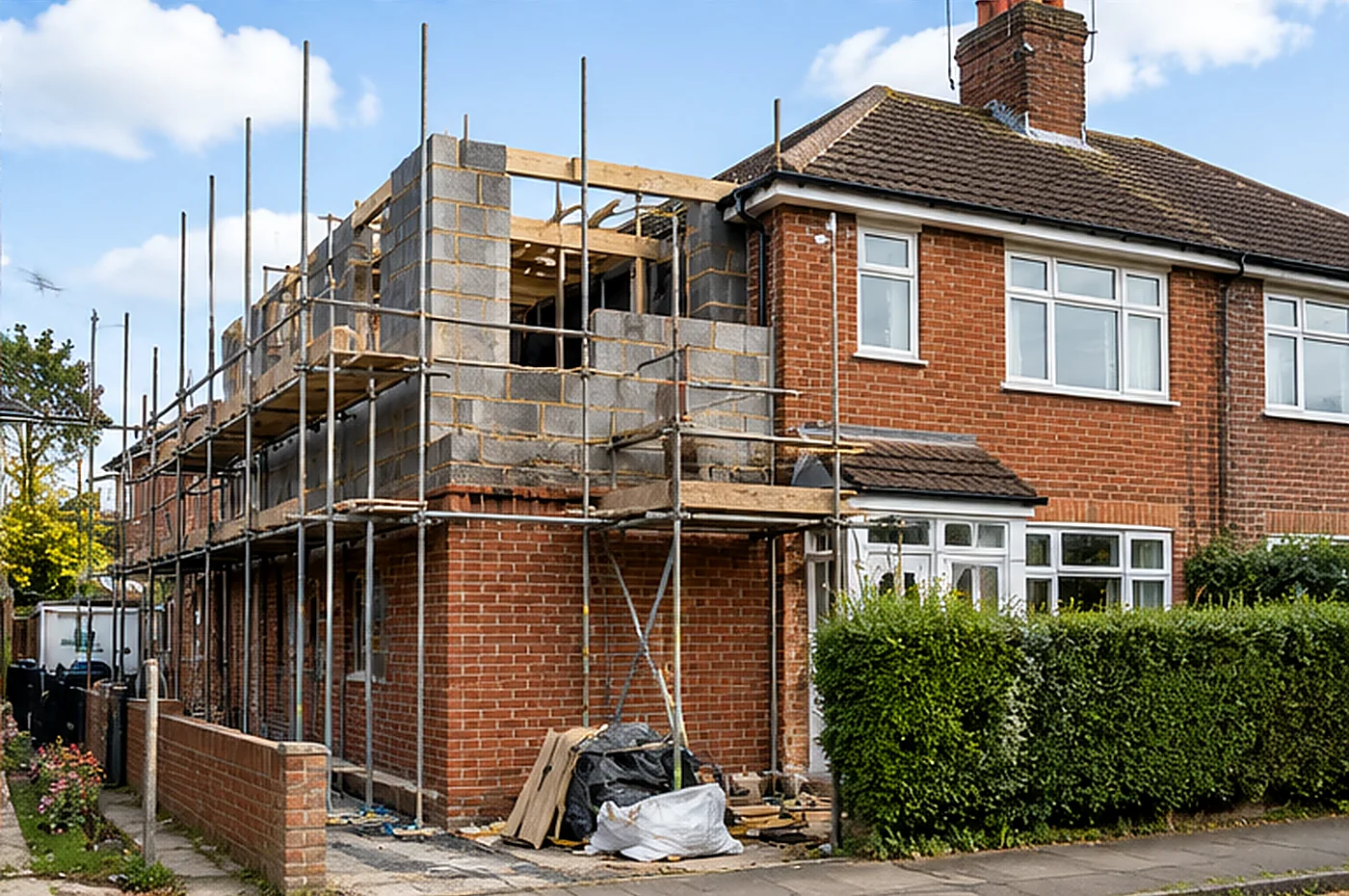
Ask for the drawings and identify whether the work affects a shared structure, the boundary or nearby foundations. Planning objections and a party wall response are different processes, and neither should be confused with permission to enter your land.
Ask which parts of the building will be altered
A neighbour may be extending into their own garden without touching your wall. Alternatively, they may need to cut into a shared party structure, build a wall at the junction or excavate beside your foundations. Request a clear plan and description of the work before deciding how the Party Wall Act applies.
Do not confuse planning with party wall procedures
A planning objection is normally considered by the local planning authority using planning rules. A party wall notice concerns qualifying works under the 1996 Act and is handled through the statutory consent or dispute mechanism. A project can have planning approval and still need a notice to adjoining owners.
What if no notice has been served?
Ask the neighbour or contractor whether the excavation depths or shared-wall alterations have been assessed. It may genuinely be work for which no notice is required. If the work is notifiable and has already begun without a valid notice, the Act itself has no routine enforcement team; affected owners may need independent professional or legal advice. Do not assume a missing notice automatically makes every extension unlawful.
Consider a written record of the property’s condition
Before heavy work starts, photograph existing cracks, ceilings and the rooms near the proposed excavation. A schedule of condition prepared by a competent surveyor can help record the baseline. It does not prevent damage, but can reduce disagreement about what was there before work started.
What happens if you disagree with notifiable work?
After a valid notice, written consent or a dispute can follow. The Act provides for a surveyor or surveyors to make an award dealing with relevant works and safeguards. You cannot veto lawful notifiable works simply by refusing to sign, but you can raise legitimate protection and methodology concerns.
Keep the conversation specific
Ask where the new trenches will be, whether any beam touches the party wall, what protections are proposed and how access will be arranged. A list of precise questions is more useful than a broad demand that all building work stop.
Not sure whether notice is needed?
Use the free checker to understand the relevant work. For section 6 excavation, completed work or an active dispute, seek independent advice; the £4.99 builder is not a suitable remedy.
Continue with a related guide
A neighbour's extension: what happens next?
- Before work. Ask for the drawings that show any shared-wall cutting, new boundary wall and proposed excavation relative to your foundations. A planning application alone may not show the structural detail.
- If you receive notice. Read the description and check the proposed start date. For party structure or qualifying excavation notices, a written response within 14 days is important; silence can trigger the dispute procedure.
- If you receive no notice. Ask in writing whether the relevant sections of the Act have been considered. Work may genuinely be outside the Act; absence of a letter is not itself proof of a breach.
- During work. Keep factual records of changes, especially damage or vibration, and raise urgent safety concerns with the relevant professionals.
Example: a neighbour proposes a rear extension
Your neighbour's single-storey extension is built entirely on their own land, but its foundations will be close to your kitchen wall. You have not received a notice. The useful first question is not whether you like the design: it is how far the excavation extends and whether its depth meets section 6. A structural engineer's drawing is more useful than assumptions based on a garden fence.
For planning objections, speak to the local planning authority. For possible party wall work, the Act has its own procedure. The two processes do not replace each other.