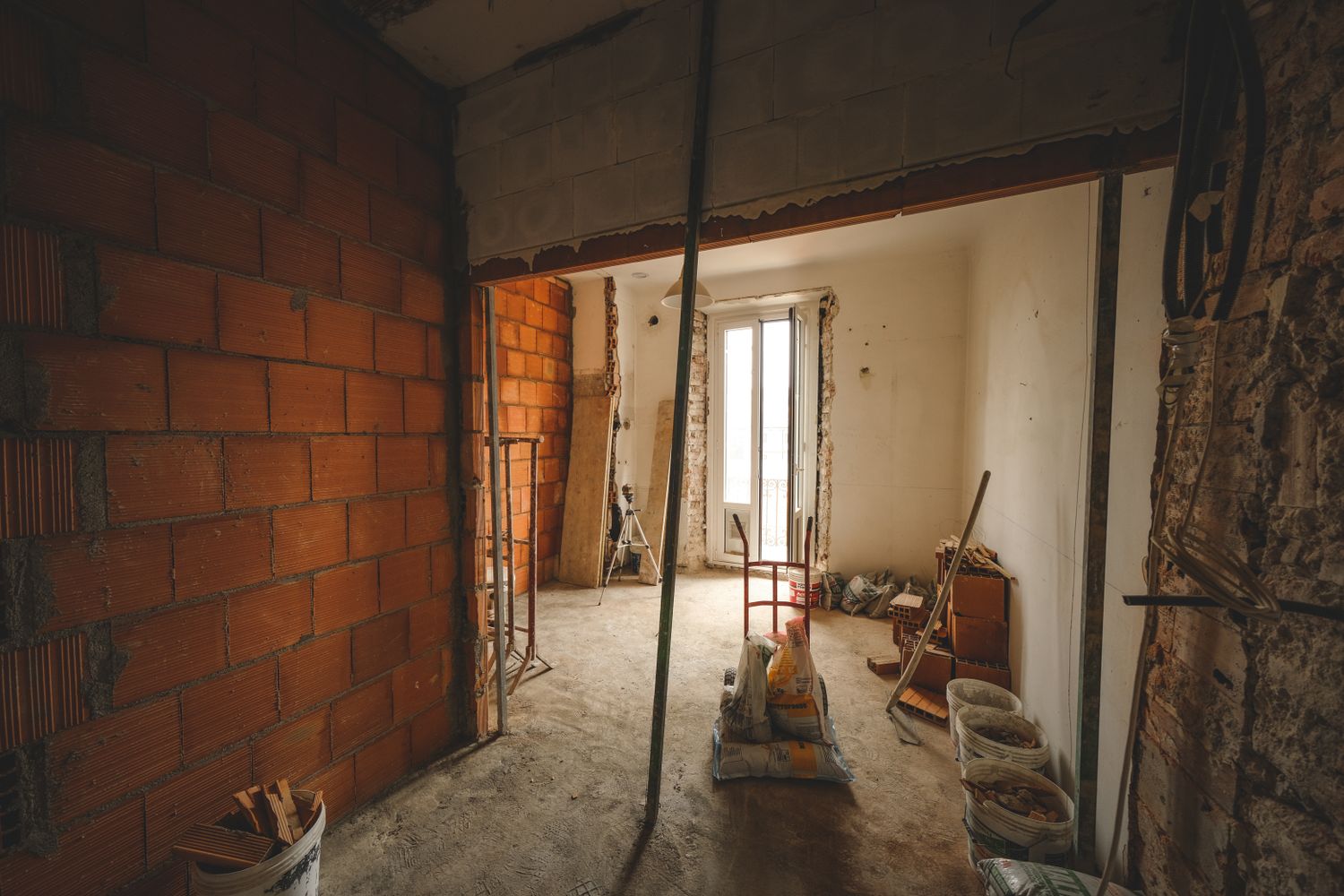
Chimney breasts can be structural. Removing one from a shared party wall may require notice as well as a properly engineered support design.
Find out what remains above
Check the chimney through every floor and at roof level, including whether the adjoining property has a matching breast. Removing a ground-floor section while leaving masonry above can create a dangerous unsupported load. A structural engineer should decide if a suitable beam or other compliant support is possible; arrangements that were once commonly used may no longer be accepted for the particular building. Ventilation, flue disconnection and fire safety are separate concerns.
Identify whether the masonry forms a party wall
The legal position depends on ownership and construction, not just whether the chimney is near the boundary. If the proposed removal cuts into or alters a party wall or party structure, it can fall within the notifiable work provisions of section 2. A party structure notice under section 3 is ordinarily required at least two months before such work. Independent masonry may present a different notice position but still needs safe support.
Plan building control and the contractor sequence
Discuss structural calculations and the proposed method with building control before appointing a demolition crew. The contractor needs to understand the propping sequence, debris control and how any remaining flue or stack will be weatherproofed and ventilated. Protect ceilings, floors and adjoining rooms from uncontrolled dust and vibration. This is not a suitable job for trial-and-error removal.
What if the neighbour has altered their chimney?
Do not assume their previous work establishes that yours is safe or free from notices. Their chimney may share support or have been changed in ways you cannot see. If there is doubt about the condition or ownership of shared masonry, obtain professional advice and record the existing condition before beginning structural work.
Does this project need a party wall notice?
A chimney breast on or forming part of a shared party wall is a strong reason to check section 2 and section 3 carefully. The builder can prepare certain supported party-structure drafts, but it does not certify the structural support or assess another owner's chimney.
Checklist before work begins
- Trace the breast and stack through every floor.
- Have the remaining masonry support designed and checked.
- Confirm whether the chimney masonry is a party structure.
- Serve any required notice before the planned demolition date.
Think you may need a notice?
Check your work for free. A personalised £4.99 PDF is available only if it fits the builder’s supported notice types.
Related guides
GOV.UK party wall explanatory booklet ↗ · Party Wall etc. Act 1996 ↗
Last reviewed: 22 October 2026. Information is not a substitute for professional assessment of your project.